What a Rotary Fly Tying Vise Actually Does
“Rotary” gets used as a marketing word on a lot of vises that barely rotate, or that wobble so much once you spin the head that the hook shifts position anyway. The actual value of rotation is narrow and specific: it lets you keep the hook exactly where it was clamped while changing which side faces you. That sounds small until you have tied a dozen flies without it and realize how many times you unclamped a hook just to look at the far side.
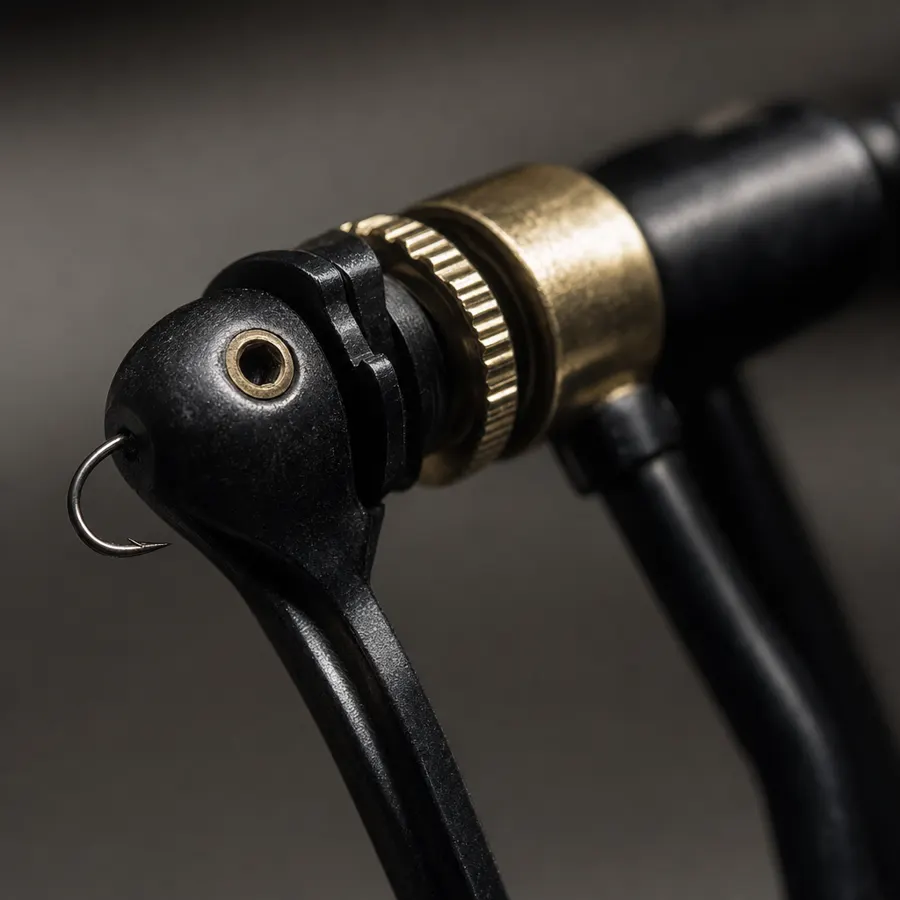
Two things rotation is actually for
| Use case | Without rotation | With rotation |
|---|---|---|
| Checking the underside of a fly | Unclamp, flip the hook, reclamp — risks losing your exact hook position | Spin the jaw head, hook never moves |
| Winding hackle or thread evenly | Walk your hand around a fixed hook, uneven wraps more likely on small hooks | Hold the material, turn the vise head instead |
| Symmetry check before finishing | Guess, or repeatedly reposition to compare sides | Rotate slowly and compare both sides in the same clamp |
What's under the rotation: the build
The base is a C-clamp with two brass thumbscrews, which clamps to a bench edge or tying table rather than relying on a weighted pedestal you have to find room for. The jaw head itself is hardened steel, which matters because a soft-metal jaw wears a groove into itself at the exact spot a hook sits, and eventually starts letting hooks twist under thread tension. Brass bushings sit between the rotating head and its housing, which is what keeps the spin smooth rather than gritty as the vise gets used. The whole vise runs about 205mm / 8.07in from base to jaw tip and comes finished in black.
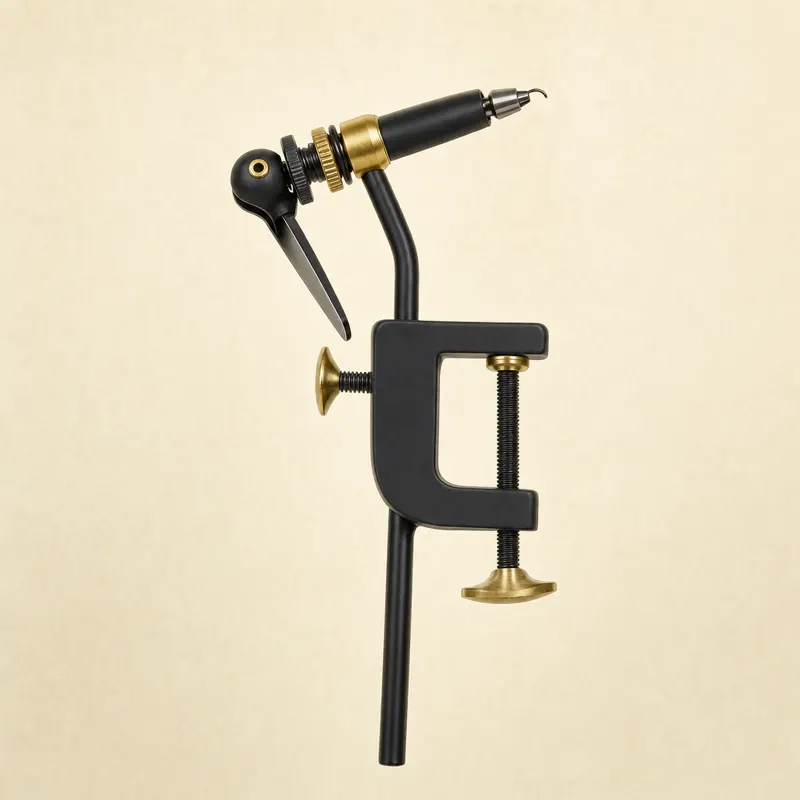
Jaw opening and hook range
A 1.2mm jaw opening sounds like a narrow spec to care about, but it is the number that determines whether the smallest and largest hooks in your box will actually seat and hold without slipping under thread tension. #4 to #24 covers dry flies, nymphs, emergers, streamers and most bass bugs — it will not clamp saltwater tarpon-size hooks, but almost nobody tying at a home bench needs that.
Setting it up on a rotary vise for the first time
Tighten the two brass thumbscrews on the base first, on a table or bench edge thick enough that the clamp does not flex — a hollow-core desk will flex more than a solid workbench, and a flexing base undoes some of the benefit of rotation because the whole vise shifts slightly as you turn it. Once the base is solid, clamp the hook by closing the jaw until it stops slipping under light pressure, not until it is as tight as the screw will go; a #22 hook does not need the same clamping force as a #4 streamer hook, and over-tightening on small wire can bend the hook point without you noticing. Spin the head through a full rotation before you start tying, just to confirm nothing is catching — on a hardened-steel jaw with brass bushings this should feel smooth the whole way around, with no grit or resistance at any point in the turn.
By the numbers
Average rating across 47 verified buyers
— Tailwater verified purchase data, 2026
Hook size range the vise jaw accepts
— Tailwater measurements, 2026
Total vise length, base to jaw tip
— Tailwater measurements, 2026
Vise alone, or with tools?
Buying the vise alone makes sense if your bench already has a bobbin holder, hackle pliers and thread and you just need a better vise under them. If you are starting from zero, a kit avoids ordering the missing pieces separately later. We lay out every option, including the fullest Pro Fly Tying Tool Set, on our best fly tying vise comparison, and cover individual hand tools on our fly tying tools page.
Rotation is the first thing I check on any vise now — it's the difference between inspecting a fly and guessing at it. See how we test.
Free shipping · 30-day money-back guarantee
Rotary fly tying vise FAQ
What does “rotary” mean on a fly tying vise?
A rotary vise lets the jaw head spin around its own axis while the hook stays clamped inside it. That means you can turn the fly to see the underside, wind material around the far side, or check symmetry without opening the jaw and repositioning the hook.
Do I need a rotary vise as a beginner?
You do not need one to learn the basics, but it removes a habit you would otherwise have to unlearn — constantly unclamping the hook to check the other side. Tying with rotation from the start means you build technique around seeing the whole fly, not just the side facing you.
Does rotation help with winding material like hackle or thread?
Yes. Instead of walking your hand and the material around a fixed hook, you hold the material still and rotate the vise head, which gives more even wraps, especially on smaller hooks where wrist angle matters.
What hook sizes does the Tailwater rotary vise handle?
The jaw opens to 1.2mm and accepts hooks from size #4 down to size #24 (Tailwater measurements, 2026), which covers the large majority of freshwater fly patterns from tiny midges to streamers.
How is the base built?
A C-clamp base with two brass thumbscrews attaches the vise to a bench or table edge. The jaw head itself is hardened steel with brass bushings supporting the rotation, and the whole vise is roughly 205mm / 8.07in long, finished in black.
Keep exploring
New to tying and need tools plus thread? See the Complete Fly Tying Kit. Already have a vise and want to fill out your bench with hand tools? Read fly tying tools explained. Comparing all three Tailwater options? Visit our best fly tying vise comparison. You can also read 47 verified buyer reviews, check our testing methodology, browse the Tailwater guides, learn more about Tailwater, or return to the Fly Tying Vise homepage. Questions? Contact us — we reply within one business day.