Fly Tying Tools, Explained One by One
A vise gets most of the attention because it is the biggest, most visible object on the bench, but the tools you hold in your hand for the actual tying — the bobbin, the pliers, the finisher — are what determine whether a fly comes out clean or comes apart the first time a fish looks at it. This page walks through the tools that matter most, what each one does, and where the Pro Fly Tying Tool Set fits if you want them all at once.
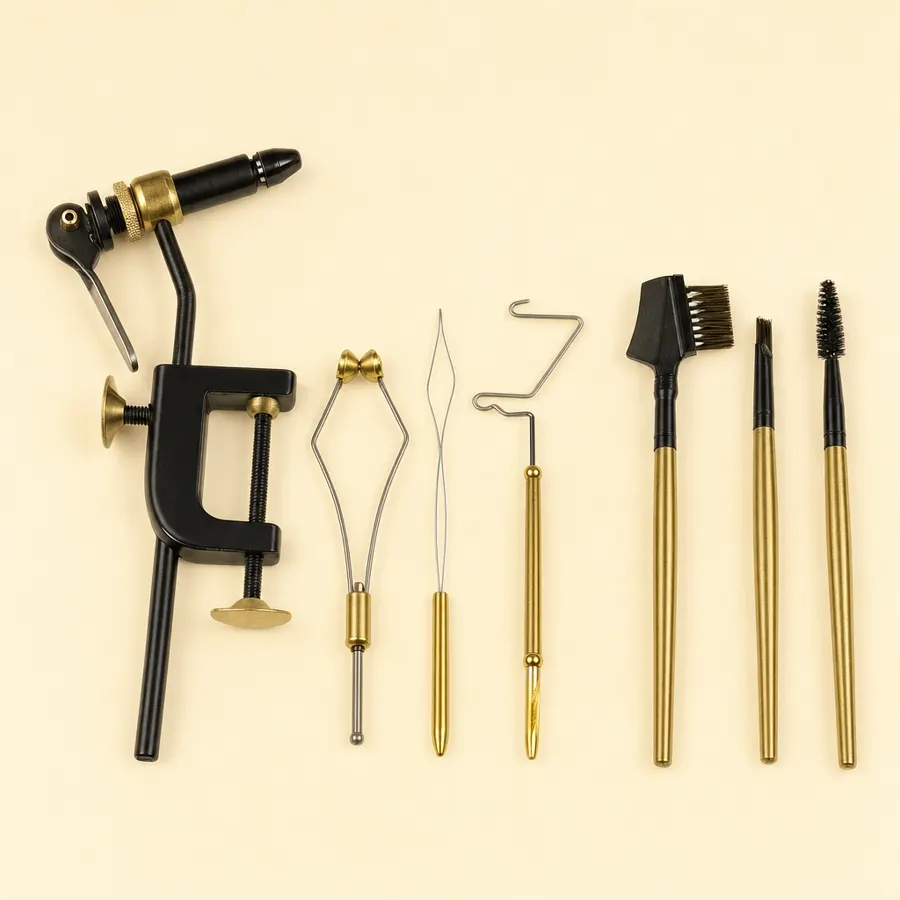
The core tools, one at a time
| Tool | What it's for |
|---|---|
| Bobbin holder | Holds the thread spool and feeds thread under consistent tension while you wrap the hook shank. It is the tool your hand returns to most during a tie. |
| Hackle pliers | Grips the tip of a hackle feather so you can wind it evenly around the hook without your fingers slipping or crushing the barbs. |
| Whip finisher | Wraps and locks the final thread turns into a head knot, so the fly does not unravel on the first cast. |
| Bodkin | A needle in a handle, used to apply head cement precisely, pick out trapped fibers, and clear a hook eye. |
| Brushes | Brush out dubbing, deer hair or other materials to give the finished fly its shape and profile. |
Where the vise fits in
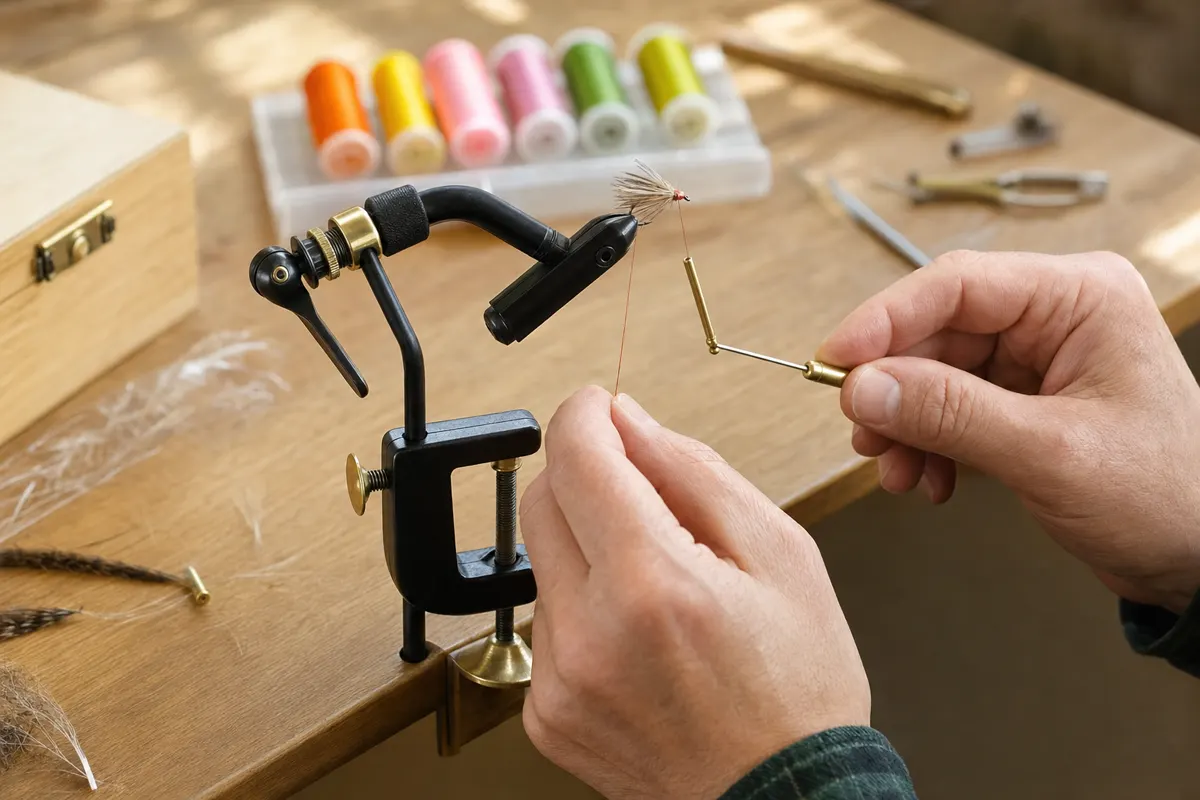
Tools do not do much good on their own — every one of them is used while a hook is clamped in a vise. That is why we sell tools bundled with the vise rather than as an accessory pack you buy after the fact. If you want the full breakdown of the vise itself, including the rotary head and the C-clamp base, see our rotary fly tying vise page.
The Pro Fly Tying Tool Set: a fuller lineup, one bench setup
The case for buying tools as a set rather than piece by piece is mostly about fit. A hackle pliers sized for saltwater streamer work will mangle a size #22 midge hackle. A bobbin tube built for heavy thread will fray fine 8/0 thread. When tools are picked as a kit rather than assembled from whatever was on sale, they are sized to work together across the hook range the vise itself handles — #4 to #24 in Tailwater’s case.
If you already own a full tool roll and only need the vise, the vise on its own is $35 less. If you own nothing yet and want the shortest path to your first fly, the Complete Fly Tying Kit covers a slightly smaller tool list plus thread for $79.99. We compare all three head-to-head on our best fly tying vise page.
By the numbers
Average rating across 47 verified buyers
— Tailwater verified purchase data, 2026
Hook size range the vise jaw accepts
— Tailwater measurements, 2026
Total vise length, base to jaw tip
— Tailwater measurements, 2026
Tools we would add ourselves
We would rather tell you what is missing than let you find out mid-tie. Scissors especially — every pattern needs one, and it is left out of both tool sets because tiers tend to already own a pair or have strong opinions about brand. Buy any decent fine-point craft scissors and you will be covered.
These are the five tools I actually reach for on every fly, regardless of pattern. See how we test or read more about Tailwater.
Free shipping · 30-day money-back guarantee
Fly tying tools FAQ
What are the essential fly tying tools?
A vise, a bobbin holder, a whip finisher, a hackle pliers and a bodkin cover almost every step of tying a fly. Brushes and a tweezers help with finishing and precision placement. Past that, most other tools are pattern-specific rather than essential to every tie.
What does a bodkin do in fly tying?
A bodkin is a needle set in a handle. Tiers use the point to apply head cement or lacquer precisely, pick out trapped fibers from dubbing, and clear glue from a hook eye. It looks like the simplest tool in the set and gets used on nearly every fly.
Do I need a hackle pliers if I have regular pliers?
Regular pliers will crush or break a hackle feather because the jaws are not shaped to hold a delicate tip under light, even tension. A dedicated hackle pliers grips the feather tip without damaging it while you wind it around the hook, which is the entire point of the tool.
What is included in the Pro Fly Tying Tool Set?
The Pro Fly Tying Tool Set bundles the Tailwater rotary vise with a fuller tool lineup covering the core tools every tier reaches for — bobbin holder, hackle pliers, whip finisher, bodkin and brushes among them — for tiers who want a fuller bench setup in one order.
Can I tie flies with a partial tool set?
Yes, but you will hit a wall quickly. A vise and bobbin holder alone can get a basic wrap started, but you will not be able to finish a secure head knot without a whip finisher, and most patterns need a hackle pliers at some point. A partial set works for one or two simple patterns and then stalls.
Keep exploring
New to tying and want thread and a vise together? See the Complete Fly Tying Kit. Want just the vise and the rotation explained in depth? Read our rotary fly tying vise guide. Comparing every Tailwater option? Visit our best fly tying vise comparison. You can also read 47 verified buyer reviews, check our testing methodology, browse the Tailwater guides, learn more about Tailwater, or return to the Fly Tying Vise homepage. Questions? Contact us — we reply within one business day.